AI Model Optimization for a Fintech Virtual Advisor
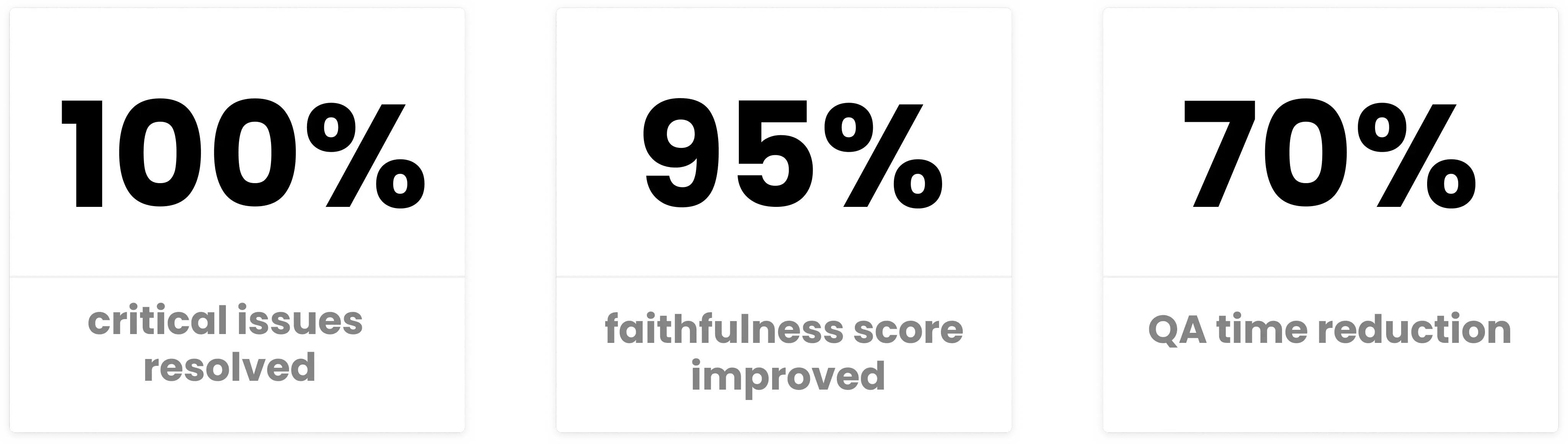
Achievements:
Summarize this case study with AI:


Table of Contents
- Introduction
- Background
- The Challenge
- Our Approach to AI Model Optimization
- Results
- Conclusion & Next Steps
- FAQ
Introduction
A German B2B fintech company operating in the financial services partnered with Perfsys to improve the performance and reliability of its AWS-based AI assistant through AI model optimization. The client, a small team of under 10 employees, operates a well-known digital platform that aggregates verified customer reviews of financial advisors, banks, and insurers — helping consumers make informed financial decisions.
The client’s vision was to build a reliable, knowledge-based AI assistant capable of answering complex user queries, referencing verified data, and maintaining context during long user interactions.
Background
The client had already implemented a serverless AWS architecture consisting of:
- Amazon Bedrock for AI inference
- Amazon S3 as a knowledge base repository
- AWS Lambda and API Gateway for orchestration
- A web UI for the frontend interface
Each AI “agent” represented a unique financial advisor persona sharing access to a centralized knowledge base stored in S3.
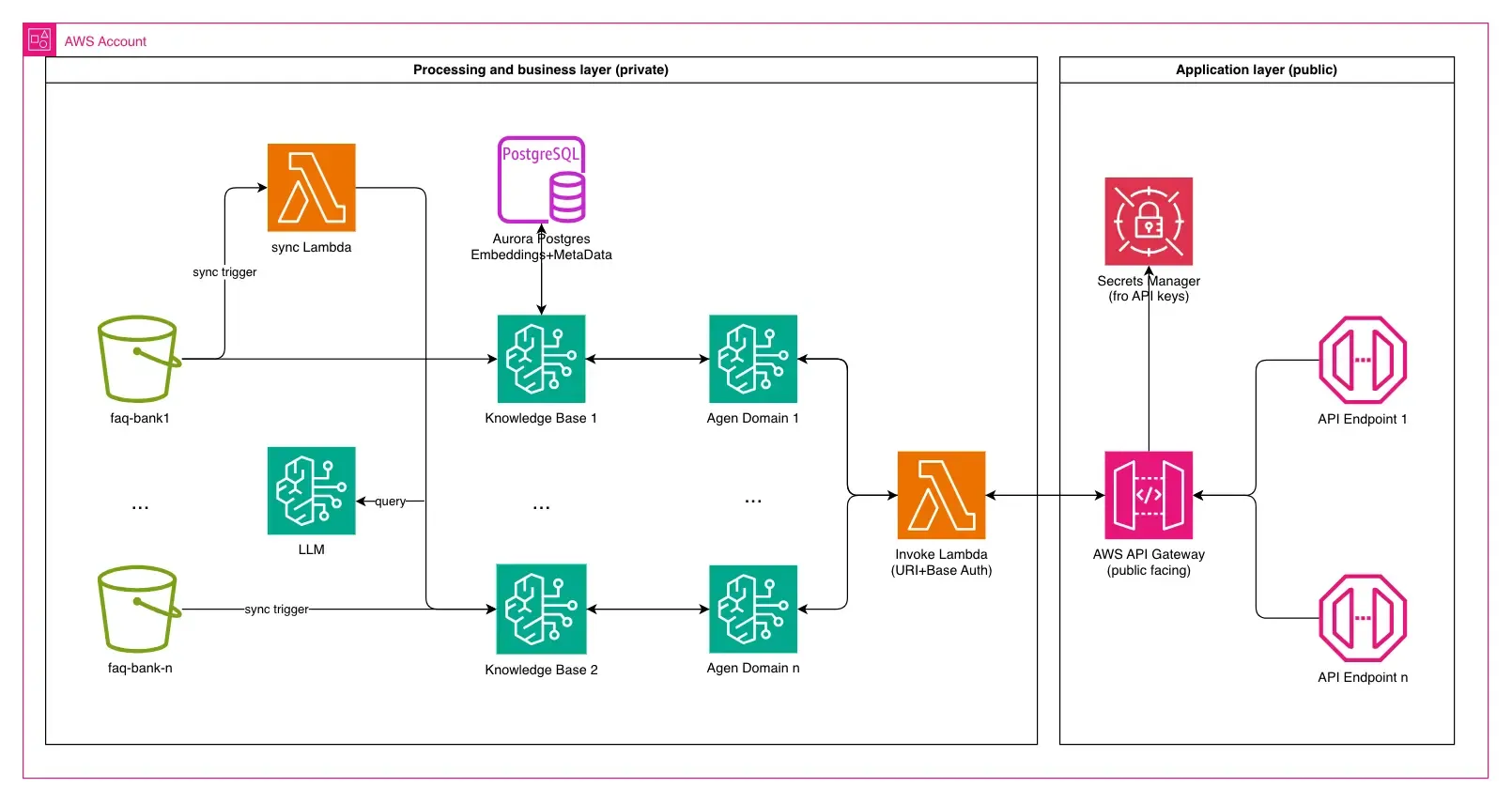 Initial AWS serverless architecture used by the client, including S3-based knowledge banks, Bedrock LLM agents, Lambda orchestration, and API Gateway endpoints.
Despite this advanced setup, the agents were inconsistent, prone to hallucination, and often ignored the knowledge base, which compromised reliability. The client engaged us to quantify, diagnose, and systematically improve agent performance.
The Challenge
While the infrastructure was functional, the core challenge lay in AI quality and consistency:
- Agents forgot their personalities or initial instructions during extended conversations
- Context retention dropped significantly after 3–4 exchanges
- Agents produced hallucinated or incorrect answers, sometimes ignoring KB data
- No automated evaluation existed to track answer accuracy or reference validity
The client’s main goal was clear:
“Ensure the AI agent provides accurate, reference-backed answers from the knowledge base, with measurable and repeatable quality metrics.”
Our Approach to AI Model Optimization
Perfsys designed a three-phase improvement strategy combining evaluation automation, model experimentation, and AI model optimization at the prompt level.
Baseline Evaluation Pipeline
We began by developing a custom Evaluation Pipeline based on the DeepEval framework. This pipeline allowed automatic testing of hundreds of AI interactions to measure:
- Faithfulness score (accuracy of KB reference usage)
- Response consistency
- Invocation time (latency)
The evaluation pipeline enabled:
- Running 500+ automated test cases across multiple sessions
- Establishing quantitative baselines for each tested model
- Reproducing real user interaction patterns
This became the foundation for systematic AI model optimization across all candidate models.
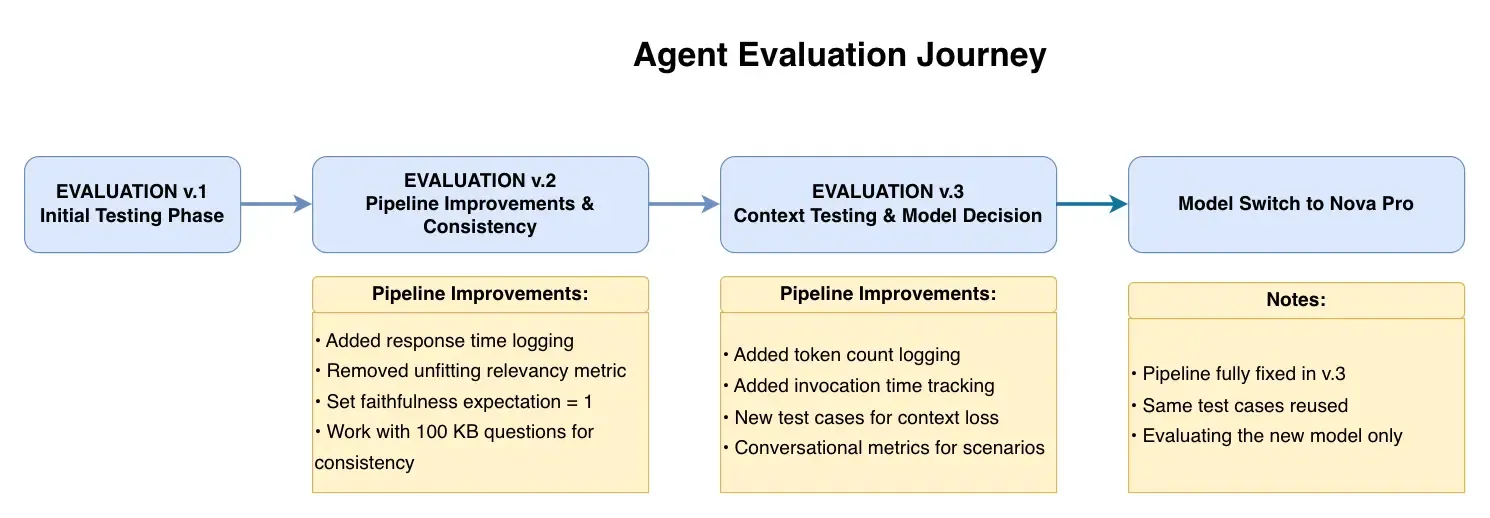 Multi-phase Agent Evaluation Journey showing how Perfsys refined the testing pipeline, validated model performance, and selected Amazon Nova Pro.
Model Comparison & AI Model Optimization Strategy
As part of our AI model optimization work, we tested three different models within AWS Bedrock:
| Model | KB Reference Failure Rate | Invocation Time | Cost/Performance Notes |
|---|---|---|---|
| Claude 3 Haiku | ❌ 80% | 5.6 sec | Fast, but unreliable KB referencing |
| Claude 3 Sonnet 3.7 | ✅ 15% | 6.8 sec | Accurate, but higher cost |
| Amazon Nova Pro | ✅ 19% | 7.7 sec | Best balance of speed, cost, and accuracy |
The testing revealed that Claude 3 Haiku, the client’s initial choice, failed to reference the KB correctly in 80% of cases.
While Sonnet 3.7 had better accuracy, Amazon Nova Pro offered optimal performance-to-cost ratio and superior consistency within Bedrock’s ecosystem.
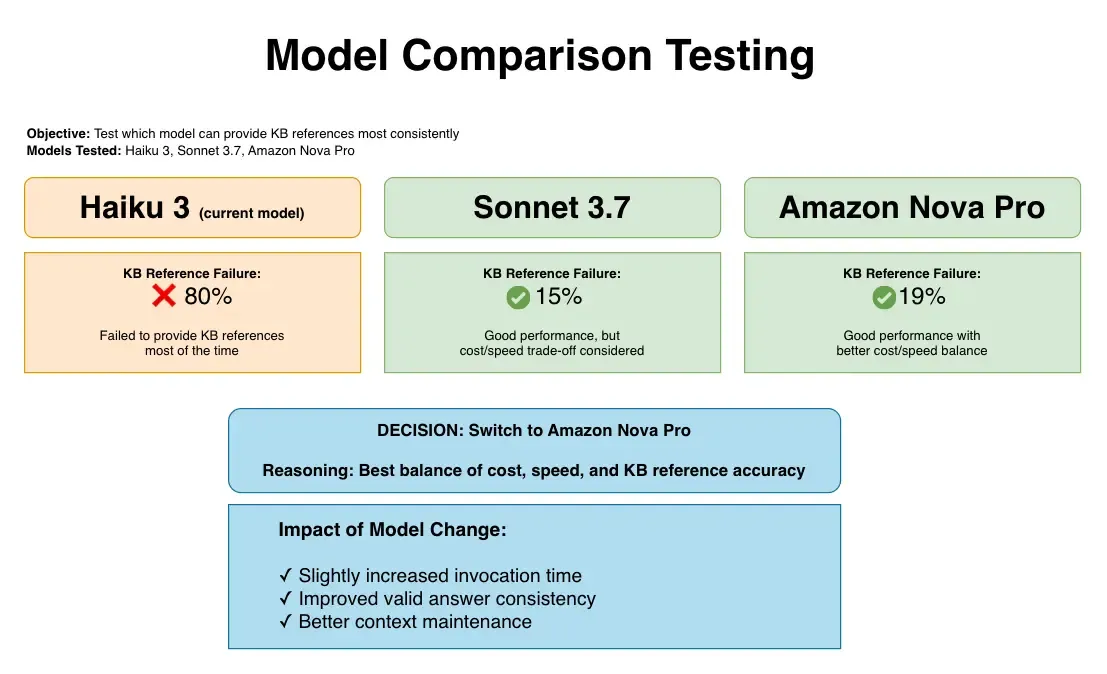 Model Comparison Testing results showing KB reference failure rates for Haiku 3, Sonnet 3.7, and Amazon Nova Pro.
Post-Migration Issue Resolution
After migrating to Amazon Nova Pro, we identified and resolved several system-level issues:
| Issue | Description | Resolution | Status |
|---|---|---|---|
| Language Support | Agent defaulted to German only | Updated system prompt | ✅ Resolved |
| Contact Info Retrieval | Failed to provide consultant details | Added structured fallback prompts | ✅ Resolved |
| KB File Conflicts | Duplicate answers in S3 files | Logic updated to prefer most recent version | ✅ Resolved |
| Out-of-Scope Handling | Agents generated irrelevant or invented answers | Improved fallback strategy | ✅ Resolved |
Need to improve the accuracy and stability of your AI agent?
Perfsys specializes in evaluation automation and AI model optimization on AWS. Contact us to discuss how we can help strengthen your AI workflows.
Results
Within six weeks, Perfsys successfully delivered a measurable improvement in AI performance and consistency through targeted AI model optimization.
Key Quantitative Outcomes
- 100% of critical issues resolved (language, fallback, KB consistency, and hallucination handling)
- Faithfulness score improved from 80% → 95%, ensuring nearly all answers are KB-based
- Evaluation automation reduced manual QA time by 70%, validating 500+ test cases per iteration
Impact Summary
- Valid answer consistency and reliability of KB usage significantly improved
- Invocation latency remained stable (~7 seconds average)
- Maintenance simplified through automated evaluation cycles
Conclusion & Next Steps
Through systematic testing, evaluation automation, and Bedrock-native AI model optimization, we helped the client transform a poorly performing AI assistant into a reliable, measurable, and scalable knowledge-based agent.
Next steps include:
- Expanding multilingual testing (DE, EN, FR)
- Integrating new agent personalities for domain-specific advisory roles
- Deploying the evaluation pipeline to monitor new model updates automatically
FAQ
What is AI model optimization?
AI model optimization is the process of improving an AI model so it delivers more accurate, consistent, and reliable results in real-world use. It includes testing different models, refining prompts, adjusting knowledge-base retrieval, and measuring accuracy and latency. In short, it helps the AI use the right information, avoid hallucinations, and perform efficiently in production.
Why is knowledge base accuracy important for an AI assistant?
Knowledge base accuracy ensures the AI agent provides answers grounded in verified information rather than hallucinating or guessing. High KB accuracy directly improves answer quality, consistency, and user trust—especially in industries like fintech.
How does AWS Bedrock support AI model optimization?
AWS Bedrock provides a unified platform for comparing LLMs, integrating vector-based knowledge retrieval, and measuring performance metrics. This enables repeatable evaluations, reduced hallucinations, and optimized AI behavior without managing complex infrastructure.
What was the primary cause of low-quality responses?
The root cause was the model’s limited faithfulness to the knowledge base. The initial Claude 3 Haiku model often generated answers from its own reasoning instead of referencing verified KB data stored in S3.
What is a “faithfulness score”?
A faithfulness score measures how closely an AI’s answer aligns with the knowledge base. A high score indicates the response is grounded in approved information rather than invented or hallucinated content.
Why was Amazon Nova Pro chosen over Sonnet 3.7?
Amazon Nova Pro provided the best balance of cost, speed, and accuracy for this use case. While Sonnet 3.7 showed slightly higher faithfulness, Nova Pro integrated more efficiently with AWS Bedrock and delivered faster, more consistent performance at a better cost-to-quality ratio.
How did Perfsys ensure measurable improvement?
Perfsys implemented a repeatable evaluation pipeline, running 500+ automated test cases to compare model performance before and after changes. This allowed us to track accuracy, latency, KB consistency, and overall improvements with quantifiable metrics.
What tools and frameworks were used?
- AWS Bedrock – LLM hosting and knowledge base retrieval
- DeepEval Framework – automated evaluation pipeline
- Amazon S3 & PostgreSQL – vectorized knowledge-base storage
- AWS Lambda + API Gateway – serverless orchestration
Cut AWS costs without compromising quality
Up to 40% savings with serverless solutions, audits, and Well-Architected Reviews.
Other case studies